
Your Shopify store doesn't need another app. It needs a team member that never clocks out.
You know that feeling at 11 PM when you are still writing product descriptions, replying to customer emails, and tweaking your Meta ad copy for the third time today?
You are not bad at running your store. You are just doing the work of five people.
And here is what nobody in the ecommerce space is talking about honestly: the AI tools most merchants are using right now are barely scratching the surface. You open ChatGPT, paste in some product details, copy the output, paste it into Shopify, move to the next tab, repeat. It feels productive. But you are still the bottleneck in every single workflow.
That is about to change. And the merchants who figure this out first are going to have an unfair advantage over everyone still copy-pasting between browser tabs.
What Is an AI Agent (And Why Should a Shopify Merchant Care)?
Let me be blunt about the difference, because the marketing around AI has made this confusing.
ChatGPT, Claude, Gemini are chatbots. You ask a question. You get an answer. You manually do something with that answer. Every interaction starts from zero unless you re-explain your entire business context.
An AI agent is fundamentally different. It connects to your actual tools. Your Shopify store. Your email. Your ad accounts. Your WhatsApp. Your Slack. And then it takes action on your behalf. Not hypothetical action. Real, "this task is done and here is the result" action.
Think of a chatbot as a consultant you call every time you need advice. An AI agent is an employee who shows up every morning, already knows your business, and starts working before you finish your coffee.
For Shopify merchants running lean operations (which is most of you), this is not a nice to have. It is the difference between growing your store and just maintaining it.
The Open Source Option: OpenClaw

The tool that made AI agents accessible to regular people is called OpenClaw. It is open source, free to use, and has exploded in popularity with over 230,000 GitHub stars and more than a million weekly downloads. It supports 28+ AI models and connects to 15+ messaging platforms like WhatsApp, Slack, Telegram, and Discord.
Here is the honest truth: if you are technical, you can set up OpenClaw yourself for free.
It runs on Docker, uses YAML configuration files, and gives you complete control over your agent. If you are comfortable with a command line and have a spare afternoon, the self-hosted route costs you nothing beyond a $5 to $10 monthly server.
Some Shopify merchants with developer backgrounds have done exactly this. They have agents running on cheap VPS servers that handle customer service drafts, inventory alerts, and content creation. The framework is genuinely powerful.
But I need to be equally honest about the other side.
The Reality Check Most Merchants Hit
Setting up OpenClaw yourself means dealing with Docker networking, SSL certificates, credential encryption, security patching, and monitoring. If you misconfigure a heartbeat interval, your agent can silently burn through API tokens while you sleep. One merchant on Reddit reported spending $22 per day on API costs from a misconfigured setup. Another developer burned through 400 million tokens with zero tangible output because their agents got stuck in processing loops.

There are also real security considerations. Security researchers have found thousands of OpenClaw instances running on the internet without any authentication. Malicious skills have been discovered in the community marketplace. When you self-host, you are responsible for all of that.
None of this means OpenClaw is bad. It means it is a power tool. And power tools require skill to operate safely.
If you are a merchant who would rather spend time selling than debugging Docker containers, that is where managed alternatives come in.
What Merchants Are Actually Using Instead
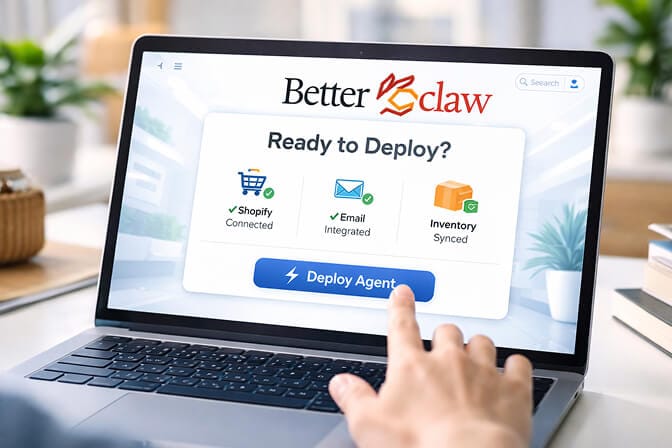
A growing number of ecommerce store owners have been turning to Better Claw, a managed platform that runs OpenClaw agents without requiring any technical setup. You deploy an agent from your browser in about 60 seconds, connect your messaging channels, and start working. No command line. No YAML files. No dedicated hardware.
The pricing is $29 per month per agent, which includes built-in security guardrails, encrypted credential storage, an action approval system (so your agent asks before doing anything destructive), and a real-time dashboard to monitor everything your agent does.
For context, that is less than what most merchants spend on a single Shopify app. And significantly less than the $200 to $300 per month some merchants report spending on tools like Manus AI.
The comparison to self-hosted OpenClaw is straightforward: you trade the ability to tinker with every configuration detail for the guarantee that your agent will not accidentally delete 200 emails or rack up a surprise API bill at 3 AM.
12 Ways This Actually Helps You Sell More
Let me get specific. Here is how ecommerce merchants are using AI agents to directly impact revenue. Not vague "improve efficiency" talk. Actual selling.
1. Turn WhatsApp Into a Sales Channel, Not Just a Support Line
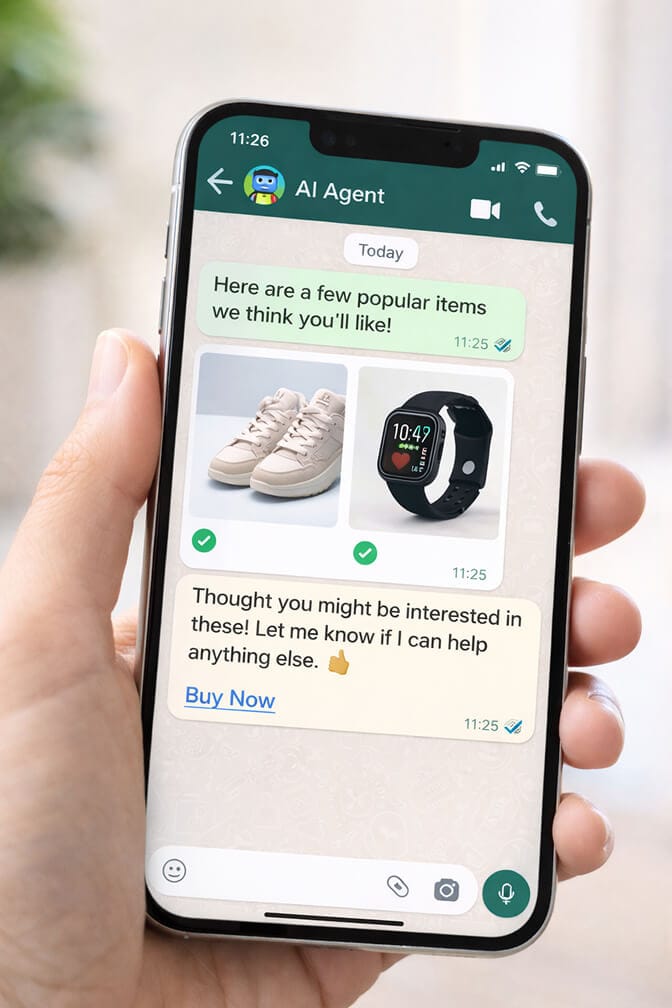
If your customers message you on WhatsApp, an AI agent can handle product questions, recommend items based on what the customer describes, and send them directly to checkout. For Shopify stores selling in markets like India, Latin America, or Southeast Asia where WhatsApp commerce is the norm, this is not optional anymore. It is where your customers already are.
2. Recover Abandoned Carts Through Conversation
Email open rates for abandoned cart sequences hover around 40% on a good day. WhatsApp and Telegram message open rates are above 90%. An AI agent that follows up on abandoned carts through messaging, with context about what the customer was actually browsing, converts at rates that email sequences cannot match. And because the agent has persistent memory, it remembers the customer's preferences from previous interactions.
3. Upsell After Every Purchase Without Being Annoying
The agent knows what a customer bought. It knows your catalog. So when someone buys a moisturizer, the agent can follow up a week later on WhatsApp with a genuinely relevant suggestion for the complementary serum. Not a generic "customers also bought" email. A personalized recommendation from an assistant that remembers their skin type and budget range.
4. Answer the Question That Is Blocking the Sale
Most product pages lose customers to unanswered questions. "Will this fit my space?" "Does this work with my existing setup?" "What is the difference between these two options?" An AI agent available on your website chat, WhatsApp, or Telegram can answer these questions instantly, 24/7. Every question it answers at midnight is a sale that would have been lost to a competitor by morning.
5. Run a VIP Concierge for Your Best Customers

Your top 10% of customers drive a disproportionate share of revenue. Deploy a dedicated agent that acts as their personal shopping assistant. It remembers their preferences, their sizing, their past purchases, and their style. For high-AOV stores in fashion, beauty, or home goods, this kind of white-glove treatment is what drives the repeat purchases that actually build a business.
6. Handle Wholesale and B2B Reorders Over Chat
If you sell wholesale, your retailers hate your order process. They want to message you on WhatsApp and say "same as last month but double the mediums." An AI agent with persistent memory can handle this. It remembers the last order, confirms the changes, and processes it. The easier you make reordering, the more often they reorder.
7. Send Restock Alerts That Actually Convert
"Notify me when back in stock" emails have low conversion because by the time the email gets opened, the item has often sold out again. An AI agent can notify interested customers the moment inventory is updated, through their preferred messaging channel, with a direct purchase link. Speed matters here, and messaging beats email every time.
8. Replace Your FAQ Page With a Conversation
Nobody reads FAQ pages. But everyone asks questions. An agent trained on your product catalog, shipping policies, return process, and sizing guides can handle the same questions your FAQ was supposed to answer, but in a way customers actually engage with. And every conversation becomes data about what information your product pages are missing.
9. Draft Customer Service Replies That Also Sell
Most customer service interactions end with the problem solved and nothing else. An AI agent drafts responses that resolve the issue and then, when appropriate, suggests a relevant product. Customer asks about caring for their new leather bag? The agent resolves the question and mentions the leather care kit. Support becomes a revenue channel.
10. Monitor Competitors and Alert You to Opportunities
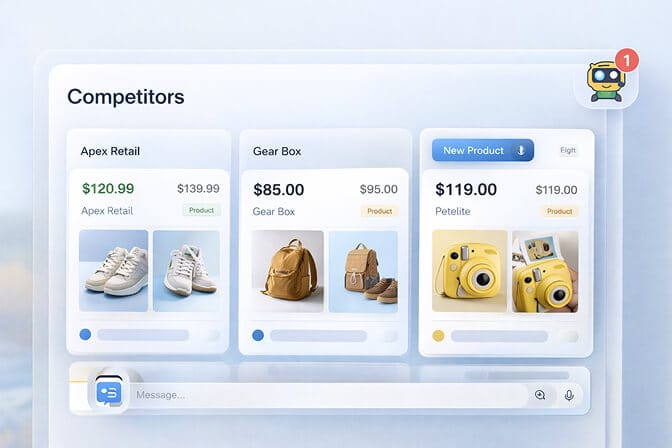
An agent running on a scheduled check can monitor competitor websites, scan the Meta Ad Library for new creatives in your category, and track pricing changes. Instead of you spending an hour each week on competitive research, you get a weekly briefing delivered to Slack or WhatsApp: what your competitors launched, what pricing moves they made, and what gaps you can exploit.
11. Deflect Returns by Solving the Real Problem
Not every return request needs to become a return. An AI agent can intercept return inquiries and explore alternatives first. Wrong size? Offer an exchange. Not sure how to use the product? Provide guidance. Buyer's remorse? Offer store credit with a small bonus. Every deflected return is recovered revenue and a customer who stays in your ecosystem.
12. Sell Across Markets Without Hiring Multilingual Staff
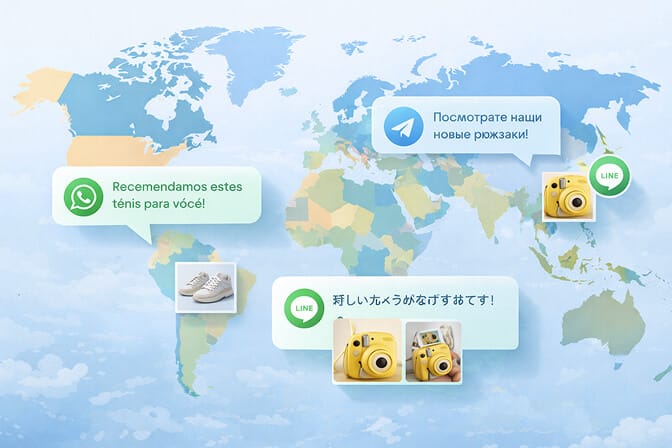
With support for 30+ AI models including multilingual ones, an agent can sell in your customer's native language on their local messaging platform. WhatsApp for Brazil. Telegram for Eastern Europe. Line for Japan. You manage everything from one dashboard. For Shopify stores expanding internationally, this eliminates the biggest barrier to entry: the cost of multilingual customer-facing staff.
How to Think About This as a Merchant
Here is the practical decision framework.
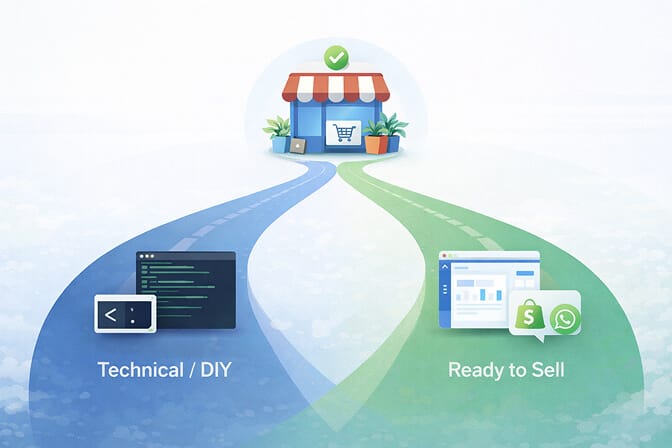
If you are technical and enjoy tinkering: Set up OpenClaw yourself. It is free, powerful, and gives you complete control. Budget $5 to $10 per month for a server and whatever you spend on AI model API keys. Expect to invest a weekend on initial setup and a few hours per month on maintenance and security.
If you would rather focus on selling: Better Claw handles the infrastructure for $29 per month per agent. You deploy in 60 seconds from your browser, connect your channels, and start building workflows. The security, monitoring, session management, and updates are handled for you.
Either way, the underlying shift is real. AI agents are not chatbots with better marketing. They are a fundamentally different tool that connects to your business and takes action. The merchants who deploy them first will operate with a level of speed and personalization that their competitors, still toggling between ChatGPT tabs, simply cannot match.
And while AI agents handle customer conversations and automate workflows, the foundation still matters. Your store needs to work flawlessly when those agents send customers to your site. That means search that actually understands intent, smart product filtering, and a discovery experience that converts browsers into buyers. Tools like Sparq handle that layer, so when your AI agent closes the conversation and sends the customer to your store, they find exactly what they are looking for.
The question is not whether AI agents will matter for ecommerce. The question is whether you will be the merchant using one, or the merchant competing against one.
Frequently Asked Questions
Do I need to know how to code to use an AI agent for my Shopify store?
No. If you go the managed route with a platform like BetterClaw, the entire setup happens through a browser interface. You pick a name for your agent, connect your messaging channels (WhatsApp, Slack, Telegram), and start giving it tasks. No command line, no code, no configuration files. The self-hosted OpenClaw route does require technical skills, including familiarity with Docker, YAML, and server management. So you have both options depending on your comfort level.
How is an AI agent different from the chatbots already available on the Shopify App Store?
Most Shopify chatbots are rule-based. They follow decision trees: if the customer says X, respond with Y. An AI agent is autonomous. It connects to your actual business tools, remembers past conversations, learns your brand voice over time, and takes real actions like drafting emails, monitoring competitors, or alerting you about low inventory. A chatbot answers a question. An agent handles a workflow.
What does an AI agent for ecommerce actually cost per month?
If you self-host OpenClaw, the platform itself is free. You will pay $5 to $10 per month for a server and whatever your AI model API usage costs, which typically ranges from $5 to $30 per month depending on volume and which models you use. If you go with BetterClaw's managed platform, it is $29 per month per agent with security, monitoring, and infrastructure included. Either path is significantly cheaper than hiring a virtual assistant or subscribing to multiple disconnected AI tools.
Can an AI agent actually help me sell more, or is this just another productivity tool?
This is the right question to ask. The answer depends on how you deploy it. If you only use an agent to summarize emails faster, it is a productivity tool. But if you deploy it on WhatsApp to recover abandoned carts, answer product questions at midnight, send personalized restock alerts, and upsell after purchases, it is directly generating revenue. The 12 use cases in this article are specifically chosen because they impact the sale, not just the workflow around it. The merchants seeing real results are the ones connecting their agents to customer-facing channels where buying decisions happen.